
Key Takeaways
- Visually Prominent Links: Google is adding inline citations, hover cards, and side panel links directly within AI Overviews, making source attribution clearer than ever.
- Quality Over Hacks: Technical tricks won’t force your site into AI Overviews. Google prioritizes original research, firsthand experience, and clear topical authority.
- SEO Isn’t Back to “Normal”: Search behavior has permanently changed. Success now requires optimizing for both direct clicks and AI engine citations.
- E-E-A-T Is Your Safety Net: Demonstrating Experience, Expertise, Authoritativeness, and Trustworthiness remains the single best strategy to secure visibility in AI-driven results.
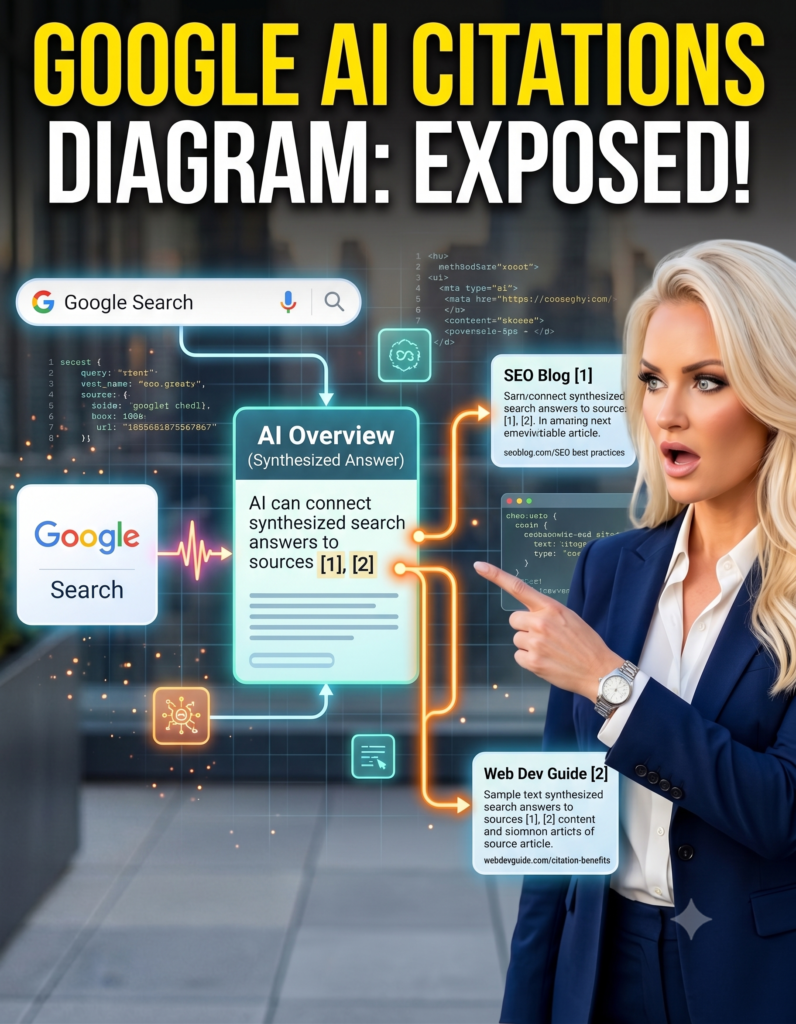
What Just Changed with Google AI Overviews?
When Google first introduced AI Overviews (formerly SGE), a wave of panic hit the publishing and marketing communities. The fear was simple and valid: if an artificial intelligence engine synthesizes an answer directly at the top of the Search Results Page (SERP), why would anyone click through to the original source?
Those fears weren’t unfounded. Early testing showed zero-click searches climbing as users got their quick answers without visiting external sites.
Now, Google is making a deliberate shift.
Recognizing that users still demand verification—and that publishers require traffic to keep creating content—Google has rolled out major visual and structural updates to AI Overviews:
- Inline Text Citations: Links are now embedded directly within the AI-generated text, pointing immediately to the underlying sources.
- Hover Previews & Cards: Mousing over a cited source displays a pop-up card showing the page title, domain, and a brief snippet before the user even clicks.
- Side-Panel Attribution: On desktop, prominent links appear in a dedicated side panel alongside the synthesized answer.
- Expanded Publisher Visibility: Testing shows higher click-through potential for cited domains compared to early wall-of-text iterations.
Does this mean organic search is returning to how it was three years ago?
Not quite. The search landscape has fundamentally shifted toward generative answer engines. But it proves a core thesis we’ve held at Business Solutions Marketing Group: Google needs high-quality web content to train and ground its models. When you publish original, highly authoritative content, Google isn’t just incentivized to read it—it’s forced to cite it.
Is Traditional SEO Dead or Just Evolving?
For twenty years, SEO followed a reliable playbook: find a high-volume keyword, write a 1,500-word summary, optimize your title tags, build a few links, and watch the traffic roll in.
That era is officially over.
AI search models don’t just match keywords; they evaluate concepts, entities, and consensus. According to technical documentation from Google’s Search Central, search algorithms are engineered to reward content created primarily for humans, exhibiting high levels of E-E-A-T (Experience, Expertise, Authoritativeness, and Trustworthiness).
TRADITIONAL SEO AI SEARCH ENGINE OPTIMIZATION
┌─────────────────────────┐ ┌─────────────────────────┐
│ • Exact-match keywords │ │ • Entity authority │
│ • Content volume │ ───► │ • Original data & insights│
│ • Basic backlink count │ │ • Multi-format citation │
│ • Ranking position #1 │ │ • AI Overview inclusion │
└─────────────────────────┘ └─────────────────────────┘
When someone asks a complex query, the AI engine scans the index, pulls key facts from reputable nodes, synthesizes a response, and drops citations next to the claims. If your page simply repeats basic definitions found on fifty other blogs, the AI engine absorbs your text without needing to attribute you specifically.
To earn that coveted inline citation, your content must offer Information Gain—unique data, personal experience, proprietary frameworks, or expert commentary that cannot be found anywhere else.
How Can Small Businesses Earn Citations in AI Search?
If you run a small or medium-sized business, competing with massive publishing platforms in AI Overviews might seem daunting. However, smaller agile brands actually have a distinct advantage: real, firsthand experience.
Here is the exact framework we use to position our clients directly inside AI search results:
1. Publish Primary Data and Firsthand Testing
AI models love consensus, but they rely on primary sources for facts. If you conduct a customer survey, run an internal experiment, or share real case studies with tangible numbers, you become an irreplaceable source node.
2. Structure Content for Easy Extraction
Generative engines process content best when it is structured logically.
- Use clear H2 and H3 subheadings formatted as common user queries.
- Place direct, 2-3 sentence summaries immediately below headings.
- Use bulleted lists for multi-step processes or key feature sets.
- Implement structured data markup (Schema.org) so algorithms understand exactly what your page represents.
3. Double Down on Brand Mentions and Digital PR
AI models don’t just read your website; they evaluate what the broader web says about you. Independent coverage from industry publications, local news, and niche blogs reinforces your brand as an authoritative entity.
4. Optimize Your Core Service & Offer Pages
Earning citations isn’t just for editorial blogs—it’s vital for your core business packages. When prospects query AI search for specific marketing solutions, you want your packages cited directly in the synthesized recommendations.
For example, our Gold Marketing Package is specifically engineered to build the deep topical authority, local entity signals, and structured content footprints that AI search engines look for when generating recommended vendor overviews. By pairing technical site optimization with dedicated content creation, local businesses can command visibility across both traditional map packs and generative answer boxes.
Frequently Asked Questions About Google AI Overviews
What are Google AI Overviews?
Google AI Overviews (formerly known as Search Generative Experience or SGE) are AI-generated answers displayed at the top of Google search results for complex queries. They synthesize key information from multiple web sources into a concise response.
- Key features include inline link citations.
- Includes hover previews for cited web pages.
- Displays a dedicated side panel for source attribution on desktop.
How do I get my website featured in Google AI Overviews?
To get featured in Google AI Overviews, focus on high-information-gain content that provides unique insights, original research, or distinct firsthand experience.
- Structure content with clear subheadings and summary statements.
- Use Schema.org structured data to clarify page context.
- Maintain strong E-E-A-T (Experience, Expertise, Authoritativeness, Trustworthiness) signals.
Will Google AI Overviews destroy organic website traffic?
AI Overviews change how traffic flows, but they do not eliminate organic search visits. While simple informational queries may see fewer direct clicks, users seeking deep answers, product recommendations, or complex service providers frequently click the inline source citations.
- Zero-click searches are higher for basic factual definitions.
- Conversion-focused queries drive qualified traffic through cited links.
- High-authority sites cited in AI Overviews often see improved click quality.
What is the difference between traditional SEO and AI search optimization?
Traditional SEO focuses primarily on keyword targeting, backlink acquisition, and meta tag optimization to win blue link rankings. AI search optimization focuses on establishing entity authority, topic comprehension, and providing distinct information that AI models cite as proof points.
- Traditional SEO: Keyword density, title tags, link volume.
- AI Search Optimization: Entity signals, clear consensus data, original information gain.
Does schema markup help with AI Overviews?
Yes, schema markup helps AI search engines parse and categorize your content quickly. By using structured data like Article, FAQPage, and Organization, you give search crawlers clear machine-readable context about your business and content structure.
- Clarifies relationships between concepts on your page.
- Aids crawlers in identifying author credentials and publication dates.
- Increases eligibility for rich search results and accurate AI extraction.
Are inline citations in AI Overviews clickable on mobile devices?
Yes, Google’s latest design updates make inline citations and source links prominent on both mobile and desktop screens. Mobile users can tap cited links directly inside the overview text or tap source cards at the bottom of the answer block.
- Mobile interfaces feature direct tap targets for sources.
- Source icons appear next to synthesized sentences.
- Interactive preview drawers allow quick site inspection.
How does E-E-A-T impact visibility in AI Overviews?
E-E-A-T (Experience, Expertise, Authoritativeness, and Trustworthiness) is critical because AI models rely on established quality signals to prevent hallucinated or inaccurate answers. Websites with verified authors, original insights, and strong industry reputations are favored as trusted source nodes.
- Demonstrates real-world experience through original photos, testing, and case studies.
- Leverages expert author bios and credentials.
- Build trust through clear business information and accurate content.
Do long-tail keywords matter for AI Overviews?
Long-tail keywords matter significantly, but they are handled differently by generative models. Instead of matching exact phrase strings, AI search engine algorithms evaluate the underlying user intent behind conversational, multi-word queries and synthesize answers across multiple related sources.
- Focus on answering complex, multi-part questions naturally.
- Address niche sub-topics within comprehensive pillar guides.
- Use conversational section titles matching real customer questions.
Can local businesses rank in Google AI Overviews?
Yes, local businesses can win visibility in AI Overviews, particularly for queries involving local service recommendations, comparative pricing, or specific industry expertise.
- Maintain an updated Google Business Profile and consistent local NAPs (Name, Address, Phone).
- Publish hyper-local content and localized customer case studies.
- Optimize core service offerings, such as our targeted Gold Marketing Package, to signal service authority.
How can I track traffic coming from Google AI Overviews?
Traffic from AI Overviews currently appears in standard analytics tools alongside organic search traffic under standard Google referral and organic channels.
- Monitor Google Search Console for sudden shifts in impressions and clicks on broad informational queries.
- Watch for changes in click-through rates (CTR) on pages optimized with high information gain.
- Track referral patterns and landing page conversions for core authority content.
About the Author
Linda Donnelly is the founder and owner of Business Solutions Marketing Group, a full-service digital marketing agency that has helped small and mid-sized businesses scale through strategic SEO, custom web design, and high-ROI digital campaigns for over a decade. With a deep passion for practical, data-driven marketing tactics, Linda specializes in turning search engine volatility into measurable revenue growth for her clients.
GBP LInk – https://share.google/C8gU1JB3P6mPKWplN
LinkedIn – https://www.linkedin.com/company/business-solutions-marketing-group-llc/?viewAsMember=true
Instagram – https://www.instagram.com/business_solutions_mg/
Twitter – https://x.com/BSMGLLC
Facebook – https://www.facebook.com/BusinessSolutionsMarketingGroup
BlueSky: https://bsky.app/profile/bussolutions.bsky.social
TikTok – https://www.tiktok.com/@linda_donnelly
YouTube – https://www.youtube.com/channel/UC4w357-txvxOaHff2hTfSSg
