The Invisible Business: Why New Clients Can’t Find You (And How to Fix It)
Ninety-seven percent. That is the percentage of consumers who go online to find a local business.
If you aren’t showing up in those searches, you aren’t just missing out on a few bonus customers. You are practically invisible to nearly the entire market. This article will show you the local SEO strategies you need to get found online. Local SEO is essential because it determines whether your business appears when potential customers search for services in your area. This guide is for small business owners who want actionable local SEO strategies to attract more clients online.
I’m Linda Donnelly. Over the last decade as the owner of Business Solutions Marketing Group, I’ve sat across the desk from hundreds of small business owners. The passion you have for your craft is incredible. You know your trade inside and out. But there is a common frustration I hear over and over again: “I’m good at what I do, so why is my phone not ringing?”
The hard truth is that being good isn’t enough anymore. You have to be findable.
Today, your biggest competitor isn’t necessarily the shop down the street. It’s your own lack of digital visibility. The goal isn’t just to “do marketing.” The goal is to position your business to “greet” new clients at the exact moment they realize they need help.
You need to meet them where they are looking. And they are looking at their phones.
The Digital Front Door: Real-World Scenarios
Let’s forget “marketing speak” for a minute. Let’s look at how real life happens today. The path from “I have a problem” to “here is my credit card” almost always starts with a search bar.
Think about these scenarios.
How does a homeowner find someone to fix a leaking faucet at 7 a.m. on a Tuesday? They don’t dig out the Yellow Pages. They grab their iPhone and type “emergency plumber near me.” They are going to call one of the first three results they see.
Consider a business owner who realizes their storefront looks shabby. They need a landscaper to make the area inviting and safe for their clients. They search “commercial landscaping services [my city].” They are looking for photos of past work and strong reviews before they even consider asking for a quote.
What about something more serious? How does someone facing a massive hospital bill due to a slip and fall on a slippery ramp find an attorney? That person is stressed and hurting. They are searching for “personal injury lawyer slip and fall.” They need immediate reassurance that they are finding an expert.
Or, think about personal care. How does a person in your neighborhood find a place for laser skin resurfacing? They aren’t just looking for the closest location; they are looking for trust. They are reading dozens of reviews to ensure they won’t regret their appointment.
In every single one of these cases, the transaction started with a specific intent online. If your business didn’t pop up to “greet” them with the answer, you lost the sale before you even knew it existed.
The Anatomy of Being “Found”
Getting noticed isn’t about shouting the loudest. It’s about showing up when called upon. It’s about relevance and trust.
If we want to capture that 97% of consumers searching locally, we need to focus on three critical pillars.
1. The Power of the “Near Me” Search (Local SEO)
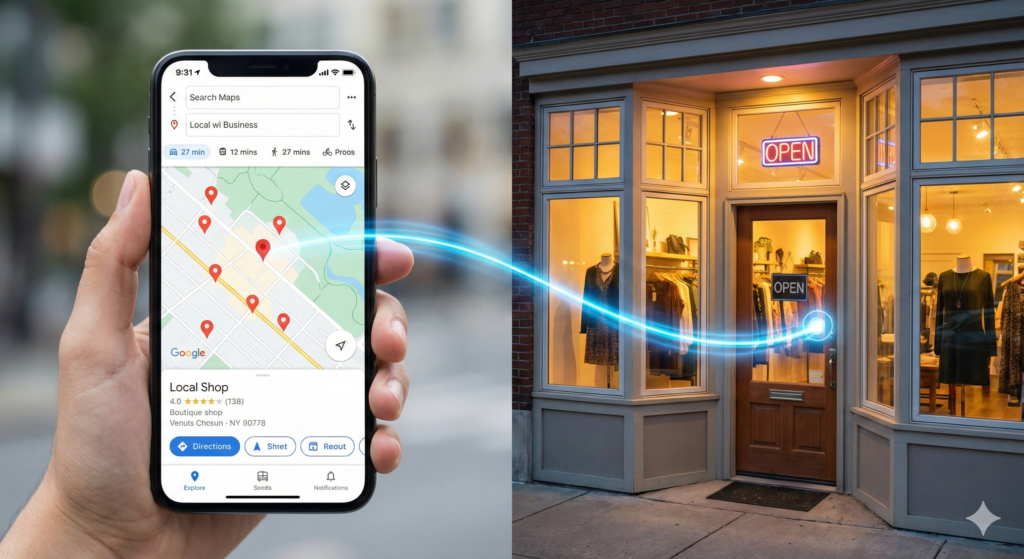
If your business serves a specific geographic area, your best friend is the Google Business Profile (formerly Google My Business). A Google Business Profile is a free tool that allows you to manage your business’s appearance on Google Search and Maps. Think of this as your digital storefront signage. When someone searches “landscaper near me,” Google wants to provide the most relevant local results. It uses your location, your category, and your activity to decide who gets the prime spots in the “Map Pack” (the top three map results).
According to recent data, “near me” or “close by” type searches grew by more than 900% over a two-year period. People want immediate, local solutions. If your profile isn’t claimed, verified, and optimized with photos, accurate hours, and the right service categories, you are handing that business to your competitors. Implementing local schema markup on your website helps search engines understand your location and services, further improving your chances of appearing in local search results.
2. Content That Answers Their Pain Points
Remember that slip-and-fall example? That person isn’t just looking for a phone number. They are looking for answers.
- “Do I have a case for a slip and fall?”
- “Who pays my medical bills after a fall?”
If your website has blog posts, FAQs, or videos that directly answer those specific questions, Google is far more likely to serve your site as the solution. You aren’t just selling a service; you are providing helpful information that builds trust before the first handshake.
You need content that speaks the language of your customers’ problems, not just the language of your industry. Be sure to include location-based keywords in your content to improve your local SEO effectiveness.
3. The Currency of Trust: Reviews
Let’s be honest. We all do it. We judge businesses by their stars.
Reviews are the modern word-of-mouth. Before that person books the laser skin resurfacing appointment, they want social proof. A study by BrightLocal found that 49% of consumers trust consumer reviews as much as personal recommendations from friends and family (Source: BrightLocal).
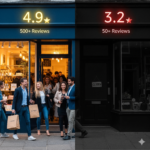
If you have five stars but only two reviews, and your competitor down the street has 4.8 stars with 150 reviews, they are going to get the call. You need a proactive strategy to generate authentic reviews from happy clients constantly.
The “Greeting” Strategy: Meeting Them Halfway
Okay, so you did the work. You showed up in the search. The prospective client clicked on your link. Now what?
This is the “greeting.”
If they land on a website that looks like it was built in 2005, isn’t mobile-friendly, or makes it hard to find your phone number, they are gone. Bounce.
It takes about 0.05 seconds for users to form an opinion about your website that determines whether they’ll stay or leave (Source: Taylor & Francis Online). You have milliseconds to look professional and trustworthy.
Your digital presence must immediately communicate: “You are in the right place. We can solve your problem. Here is how to contact us.”
Let’s recap the most important local SEO strategies you can implement right now.
Key Takeaways: Actionable Local SEO Strategies
Actionable Local SEO Strategies:
- Claim and Optimize Your Google Business Profile: Ensure your profile is claimed, verified, and fully completed with accurate information, photos, and service categories. A well-optimized Google Business Profile is crucial for local SEO, as it directly impacts your business’s visibility in local search results.
- Ensure NAP Consistency Across All Platforms: Your business Name, Address, and Phone number (NAP) must be identical everywhere online—on your website, directories, and social media.
- Implement Local Schema Markup: Add local schema markup to your website to help search engines understand your location and services.
- Create Content with Location-Based Keywords: Develop blog posts, service pages, and FAQs that include your city, neighborhood, or region to boost local relevance.
- Encourage and Manage Online Reviews: Ask satisfied customers for reviews and respond to them to build trust and improve your local rankings.
- Build Local Backlinks: Get links from local organizations, business associations, and non-competitor local businesses to strengthen your authority.
- Make Your Website Mobile-Friendly: Ensure your website loads quickly and looks great on all devices, as most local searches happen on mobile.
Other Key Takeaways:
- Search is the New Yellow Pages: 97% of consumers look online for local businesses. If you aren’t visible there, you are invisible to the market. A well-optimized business website serves as the central hub for your local SEO strategies, customer engagement, and content marketing. Make sure your business website is updated with relevant information and is mobile-friendly to provide a seamless experience for users on mobile devices.
- Intent Matters: Clients aren’t just browsing; they have specific problems (leaky faucets, legal trouble, etc.). Your online presence must provide the solution to their specific intent. Optimizing for local search results helps attract customers in your area and drives organic traffic to your site.
- Google Business Profile is Critical: For local businesses, claiming and optimizing this free tool is non-negotiable for showing up in “near me” searches.
- Reviews Are Currency: Nearly half of all consumers trust online reviews as much as personal recommendations. You need a strategy to get them consistently. Positive reviews are essential for building trust with potential clients and improving your rankings in local search results.
- The “Greet” Must Be Professional: You have milliseconds to make a good impression once they land on your site. It must be fast, mobile-friendly, and clear.
H2: Stop Trying to Do It All Yourself
I know what you are thinking. “Linda, this sounds great, but I’m busy running a business. I don’t have time to learn SEO, write blogs, manage my Google profile, and chase down reviews.”
I get it. You shouldn’t have to. You should be focusing on fixing faucets, landscaping grounds, winning cases, or providing excellent skin care.
Trying to piece together these different strategies—a little SEO here, a little social media there—usually results in burning a lot of time for very little return. It’s like trying to build a house by hiring a plumber one month, an electrician the next, and hoping it all fits together at the end.
This is exactly why we developed our services at Business Solutions Marketing Group. We wanted to provide a cohesive approach that handles the heavy lifting for you.
Our GOLD Marketing Package is specifically designed to be that “all-in-one” engine that helps new clients find you. We take care of the technical SEO, we manage the local listings, we help generate the reviews that build trust, and we create the content that answers your clients’ questions.
We ensure that when someone in your neighborhood needs what you do, your business is there to greet them.
You’re great at what you do. Let us make sure everyone else knows it too.
Developing a Marketing Plan
For small business owners, developing a marketing plan is the foundation for achieving your business goals and driving sustainable business growth. A well-crafted marketing plan helps you clearly define your target audience, outline effective marketing strategies, and allocate resources where they’ll have the most impact. By prioritizing search engine optimization (SEO) within your plan, you can boost your business’s online presence, improve your ranking in search engines like Google Search, and attract more potential customers searching for your services.
Defining Your Target Audience
A strong marketing plan should start by identifying your target market. Understanding who your ideal customers are allows you to tailor your messaging and marketing efforts to their specific needs and preferences.
Content Marketing Strategy
A strong marketing plan should include a content marketing strategy that delivers valuable and relevant content to your target market. This means creating blog posts, sharing high quality images, and encouraging user generated content that speaks directly to the needs and interests of your audience.
Leveraging Digital and Traditional Marketing
Leveraging digital marketing tactics such as social media marketing and email marketing campaigns allows you to build lasting customer relationships, increase brand visibility, and keep your business top-of-mind for both existing and prospective customers.
Don’t overlook the power of traditional advertising, such as print advertising, to reach a broader audience in your community. However, it’s important to ensure that every marketing effort is cost effective and aligns with your overall business goals. Offering incentives like loyalty programs and referral programs can turn satisfied customers into enthusiastic brand ambassadors, helping you attract new customers through successful referrals and positive word-of-mouth.
Local businesses can also benefit from partnering with other local or complementary businesses to expand their reach and create mutually beneficial marketing opportunities. Maintaining up-to-date local listings, responding to online reviews, and engaging with your audience on social media platforms are all essential for building a strong business’s online presence and increasing brand exposure.
Tracking and Optimizing Results
To ensure your marketing plan is working, regularly track key performance indicators such as website traffic and social media engagement. Analyzing these metrics allows you to refine your marketing strategies, identify what’s working, and make data-driven decisions to optimize your marketing efforts. By developing a comprehensive marketing plan that incorporates search engine optimization SEO, content marketing, and both digital and traditional tactics, small business owners can increase their online visibility, attract more customers, and achieve long-term business growth.
Frequently Asked Questions (FAQ) about Local SEO
Frequently Asked Questions (FAQ) about Search Engine Optimization
1. Why isn’t my business showing up on Google Maps even though I have a website?
- Having a website doesn’t guarantee placement on Maps.
- You need a verified and optimized Google Business Profile (GBP).
- Google needs to verify your physical location and service area before it will rank you locally.
2. Do I really need a blog for my small business?
- Yes, but don’t think of it as a “dear diary.”
- Think of it as a library of answers for your customers.
- Blogging helps you rank for specific questions people type into Google, positioning you as a helpful expert.
3. How many reviews do I need to look trustworthy?
- While more is generally better, recency matters too.
- A business with 20 reviews from the last month often looks better than one with 100 reviews from three years ago.
- Aim for a steady stream of new feedback.
4. Can I just rely on Facebook instead of a website?
- No. While social media is great for engagement, it’s rented land.
- You don’t own the platform, and it’s not where people usually go when they have an immediate, urgent need (like a burst pipe).
- You need a professional “home base” website.
5. What is “Local SEO” and how is it different from regular SEO?
- Regular SEO focuses on ranking globally.
- Local SEO focuses on signaling to Google that your business is relevant to people physically located in your geographic area.
- It relies heavily on your Google Business Profile and local citations.
- Local SEO also relies on NAP consistency—making sure your business Name, Address, and Phone number are identical across all platforms.
6. How long does it take to see results from these marketing efforts?
- SEO is a marathon, not a sprint.
- While some changes (like fixing GBP info) happen fast, building authority and moving up rankings typically takes 3 to 6 months of consistent effort.
7. My competitor has way more money for marketing. Can I still compete?
- Absolutely. In local search, relevance and proximity often beat big budgets.
- A highly optimized local profile with great, authentic reviews can outperform a big national competitor in your specific neighborhood.
8. What is the biggest mistake small businesses make online?
- Inconsistency.
- They try marketing for a month, get busy, and stop.
- Or their business hours on Google say they are open, but they are actually closed, frustrating customers.
- Consistency builds trust with both Google and clients.
9. How do I ask clients for reviews without feeling awkward?
- Make it part of your process!
- The best time to ask is right after you’ve delivered a great result.
- “Hey, I’m glad we could fix that leak so quickly. Would you mind taking 30 seconds to share your experience on Google? It really helps our small business.”
10. Is the BSMG GOLD Marketing Package right for my industry?
- Our strategies are based on fundamental principles of how people search today, which applies to almost every local service business—from plumbers and lawyers to landscapers and aestheticians.
GBP LInk – https://g.co/kgs/GR8yH4a
LinkedIn – https://www.linkedin.com/company/business-solutions-marketing-group-llc/?viewAsMember=true
Instagram – https://www.instagram.com/business_solutions_mg/
Twitter – https://x.com/BSMGLLC
Facebook – https://www.facebook.com/BusinessSolutionsMarketingGroup
BlueSky: https://bsky.app/profile/bussolutions.bsky.social
TikTok – https://www.tiktok.com/@linda_donnelly
YouTube – https://www.youtube.com/channel/UC4w357-txvxOaHff2hTfSSg