Content marketing isn’t just about “writing stuff” anymore; it’s about survival in an era where AI is eating traditional search for breakfast. In fact, experts predict that by the end of 2026, traditional search engine volume will drop by 25% as consumers pivot toward AI-powered chatbots and virtual agents (Source: Gartner). AI platforms and AI search are rapidly transforming how users find information, with AI systems like ChatGPT and Perplexity now playing a central role in determining which content is surfaced in search results. As AI-assisted search tools gain an increasing share of the total search landscape, law firms and marketers must adapt their strategies to remain visible. This guide is your roadmap to building a winning content marketing strategy for 2026.
This guide is designed for small business owners, marketers, and law firms looking to future-proof their content marketing strategy for 2026. In today’s rapidly evolving digital landscape, understanding how to adapt your approach is crucial for staying visible and competitive. Content will remain a critical component of marketing strategies, serving as the foundation for both traditional and AI-driven search models. Content is the fuel for both traditional search models and the latest answer engines and AI chatbots.
I’m Linda Donnelly, and I’ve spent over a decade at Business Solutions Marketing Group helping small business owners navigate the choppy waters of digital marketing. I’ve seen the “blogging is dead” headlines a thousand times, but here is the truth: content isn’t dying; it’s evolving into something much more conversational. To stand out in AI-driven search, building trust and providing a comprehensive response to user questions is more important than ever. If you want to get noticed today, you need to answer the questions your customers are actually asking—not just the ones you wish they were asking.
The customer journey is also evolving as AI-assisted search tools and features change how users interact with search, requiring marketers to optimize for each stage of this new, algorithm-driven process. To succeed, you’ll need to track new metrics that measure your authority, expertise, and trustworthiness in this AI-powered landscape.
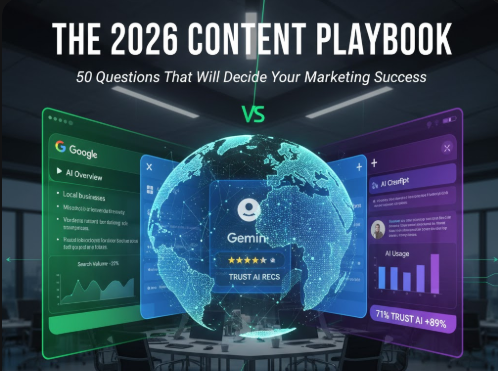
What Are the Essential Elements of a Content Marketing Strategy for 2026?
Summary: Core Elements of a 2026 Content Marketing Strategy
- Authenticity: Build trust with transparent, honest, and experience-driven content.
- Trust: Prioritize E-E-A-T (Experience, Expertise, Authoritativeness, Trustworthiness) to establish credibility.
- Structural Optimization for AI: Use clear structures, schema, and formatting to ensure your content is easily discoverable by AI-driven search and answer engines.
- Integration of AI with Human Expertise: Combine AI tools with real-world insights and subject matter expertise for content that stands out.
- Quality-Driven Content: Shift from high-volume posting to producing fewer, higher-quality pieces that deliver unique value and information gain.
Introduction to Content Marketing
Content marketing is the backbone of modern marketing efforts, empowering companies to connect with their audience and build lasting trust. A strategic content marketing strategy does more than just fill your website with words—it positions your business as a leader in your field, drives website traffic, and attracts new customers. In today’s digital-first world, search engines are the gatekeepers between your business and potential clients. To stand out in search engine results, you need to optimize every piece of content for both users and algorithms. This means understanding what your audience is searching for, identifying opportunities to address their needs, and consistently delivering valuable, relevant content. When done right, content marketing not only increases your website traffic but also turns visitors into loyal customers, fueling your company’s growth and reputation.
Content Brainstorming and Planning
Effective content marketing starts long before you hit “publish.” Content brainstorming and planning are where marketing teams lay the groundwork for success.
Identifying Your Audience
The first step is to pinpoint your target audience and dig deep into their needs, preferences, and pain points. Understanding your audience ensures your content is relevant and engaging.
Leveraging Analytics
By leveraging analytics tools, you can:
- Analyze website traffic
- Review search engine results
- Study user behavior
This data-driven approach helps you uncover what your audience is truly looking for and create content that resonates.
Using AI Tools
AI tools can further streamline your content creation process by:
- Analyzing trending topics
- Suggesting keywords
- Optimizing your content for search engines
For example, AI-powered platforms can spot gaps in the market and generate fresh ideas. By combining human creativity with the power of AI and analytics, companies can create content that not only meets but exceeds audience expectations—maximizing the impact of their marketing efforts.
With your content plan in place, you’re ready to build a strategy that delivers results.
Strategy & Foundation: Why Most Plans Fail Before They Start
Too many business owners treat content like a chore rather than an asset. But did you know that companies using blogs generate 55% more website traffic and 67% more leads compared to their non-blogging peers? (Source: DemandMetric). Effective content production in 2026 now requires collaboration between subject matter experts and the integration of systems to streamline workflows, ensure accuracy, and enhance authority. It’s time to stop shouting into the void and start building a bridge.
A documented content marketing strategy is essential, but it’s equally important to regularly identify opportunities for growth and improvement through ongoing analysis. Key elements of a successful content marketing strategy include consistency, expertise, and adaptability, all of which help build brand authority and long-term results.
1. What is the #1 mistake in content marketing?
Consistency. Most businesses post three blogs in a week and then disappear for six months. However, it’s important not to rely solely on one content channel or tactic—diversifying your content marketing strategy in 2026 with a mix of formats and platforms will help you reach a broader audience and reduce risk.
Building trust with your audience is essential. Incorporate authentic review content and address customer concerns directly to demonstrate transparency and expertise, which helps establish your authority and credibility.
2. How often should I publish?
Quality always beats quantity. However, optimizing content for user intent and including other content types, such as FAQs and reviews, can help maintain engagement and consistency even if you publish less frequently. Brands that produce content weekly see a 3.5x increase in conversions compared to monthly publishers.
3. What format converts best in 2026?
Short-form video is the heavyweight champion, but long-form “thought leadership” articles drive 57% more engagement in the B2B space. Video content is particularly effective for lead generation and for guiding prospects through the customer journey, as it can engage viewers at every stage and help build trust with potential clients.
4. Do I really need a documented strategy?
Yes! Only 29% of marketers say their documented strategy is “very effective,” but those who have one are 414% more likely to report success. Tracking the right metrics allows you to evaluate your content marketing strategy 2026, revealing new opportunities for growth and improvement.
5. Should I focus on my blog or social media?
Your blog is “owned media”—you control the ground. Sharing transparent information about your service offerings, such as service rates, warranty details, and answers to common customer concerns, on your blog can help build trust and authority with your audience. Social media is “rented land.” Use social to drive people back to the assets you own.
With a solid foundation in place, the next step is to plan and brainstorm content that aligns with your strategy.
SEO & Search: How to Rank When AI is Everywhere
The “Search Wars” are real. Large language models are powering new search features like Google’s AI Overviews, which are reducing clicks to traditional results and changing how users interact with search. Generative AI features such as Google’s AI Overviews now appear more frequently, synthesizing comprehensive responses from multiple queries using techniques like Google calls (query fan-out), where Google’s AI runs several sub-queries simultaneously to deliver authoritative answers. This makes it critical to optimize your content for these features to maintain visibility.
89% of small business owners now use AI for SEO, but the goal has shifted from keyword stuffing to “Information Gain”—providing unique value that AI can’t just scrape from someone else. Maintaining a strong position in search results is now essential, as it increases the likelihood your content will appear in AI-generated answers and summaries.
With about 80% of consumers relying on zero-click results in at least 40% of their searches, traditional search engine optimization alone will not be enough to succeed. Ongoing SEO efforts and investment of money are necessary to adapt to this zero-click world. Content with strong E-E-A-T signals often continues to receive clicks even when competing with AI summaries. The most successful approach now combines structured content, excellent user experience, and data-informed updates while prioritizing user needs. Successful brands will embrace innovation and experiment boldly to maintain brand relevance and organic traffic in this evolving landscape.
11. Is SEO dead because of ChatGPT?
Not dead, just different. We are moving from Search Engine Optimization to GEO (Generative Engine Optimization). GEO stands for Generative Engine Optimization, which focuses on making content authoritative enough to be cited by AI.
12. What is “Zero-Click Search”?
It’s when a user gets their answer directly on the Google search page (or from an AI summary) without ever clicking your link. Zero-Click Search refers to search results where users get the information they need without visiting a website.
13. How do I beat zero-click search?
By providing “deep-dive” content. If a user needs a simple answer, AI gives it to them. If they need an expert to solve a complex problem, they click on you.
14. What is the ideal blog post length?
Average blog length is around 1,350 words, but posts between 900–1,200 words often see the best balance of traffic and backlinks. However, providing a comprehensive response to user queries is often more important than simply hitting a specific word count, as search engines and AI-driven answer engines prioritize in-depth, complete answers.
15. Do images actually help SEO?
Absolutely. Blogs with relevant images get 94% more views. Plus, AI uses image alt-text to understand your authority. Including authentic review content and testimonials from real people can further enhance your authority and build trust with your audience.
Structured Data and Content Visibility
In the race to the top of search results, structured data is your secret weapon. By implementing schema markup, you help search engines understand the context and relevance of your content, making it easier for them to surface your site in search results. This is especially critical as zero click searches—where users get answers directly on the search page or through AI summaries—become the norm.
Why Structured Data Matters
Structured data increases your chances of being featured in Google’s AI Overviews and other prominent search features, driving more website traffic even when users don’t click traditional blue links.
How to Implement Structured Data
For businesses, this means more visibility, more leads, and higher conversion rates. For example, adding schema markup for your business hours, address, and contact details ensures customers can find and connect with you quickly.
In today’s competitive landscape, optimizing your website with structured data isn’t just a technical detail—it’s a critical step in making sure your business stands out in both AI and traditional search.
The AI Revolution: Gemini, ChatGPT, and Your Business
This is the big one. 89% of marketers are now using generative AI tools (Source: Content Marketing Institute). But remember: AI is the “prep cook,” not the “chef.”
AI platforms and large language models are transforming content production and the way businesses approach marketing, driving new standards for visibility and engagement. To succeed, marketers must integrate systems—such as structured data and AI interpretation systems—and involve subject matter experts to ensure content is authoritative, accurate, and trusted.
Marketers must use AI tools strategically, uphold E-E-A-T, and adapt to new search formats to thrive in the AI-driven search landscape. E-E-A-T stands for Experience, Expertise, Authoritativeness, and Trustworthiness, and is crucial for evaluating content quality. Generative AI will influence how law firms create and optimize content, requiring a focus on quality and user needs. Optimizing content specifically for AI systems is essential to increase visibility in AI-driven search results, such as AI overviews and generative summaries. Content marketing strategies in 2026 must integrate AI with human expertise and foster authentic community-driven engagement.
26. Should I use AI to write my entire blog?
No. Only 7% of marketers publish AI content without editing. You should not rely solely on AI for content creation—input from real people is essential for authenticity and trust. You must add your personal voice, exclamation points, and real-world experience to stand out!
27. How does Gemini change things for small businesses?
Gemini is built into the Google ecosystem. Optimizing your Google Business Profile can improve your position in search results and highlight your service offerings to potential clients. It pulls from your Google Business Profile. If your profile is optimized, Gemini is more likely to recommend you.
28. Can AI help with video?
Yes! AI Avatar Video Marketing is a game-changer. Video content is a powerful tool for lead generation and building brand authority, especially in the legal sector, where demonstrating expertise and trustworthiness is crucial to attracting and converting potential clients. Video content marketing is becoming increasingly important for law firms to showcase their knowledge, engage potential clients, and set themselves apart from competitors. Utilizing video content can significantly enhance a law firm’s ability to convey expertise and build brand authority.
It allows you to produce high-quality video content without needing a full film crew.
29. Does AI-generated content rank on Google?
Google cares about quality and helpfulness, not just who (or what) wrote it. To rank well in 2026, your content marketing strategy must address user queries directly and build strong E-E-A-T (Experience, Expertise, Authoritativeness, and Trustworthiness) signals into every piece of content.
Google’s quality guidelines emphasize that content must demonstrate the author’s actual experience and expertise to meet E-E-A-T standards. Content that lacks E-E-A-T signals is often treated as low-quality or spam by Google’s algorithms, while high-quality content that meets E-E-A-T criteria is more likely to appear in search results and AI-generated answers. Building E-E-A-T into your content requires providing clear, accurate, and trustworthy information, especially for legal topics, and directly addressing the queries and concerns of your audience. E-E-A-T is not a single ranking metric but a framework that influences how algorithms evaluate content quality, so including first-hand expertise and depth of knowledge relevant to your audience’s needs is essential for credibility and improved rankings.
But “thin” AI content will be buried.
30. How do I make my content “AI-friendly”?
Use clear structures, H2 tags, and natural language questions. AI loves “scrape-able” definitions and clear order of thoughts.
Personalized Experiences and Content
Today’s customers expect more than generic information—they want content and experiences tailored to their unique needs. Personalization is now a critical element of any successful marketing strategy.
The Role of Personalization
By using data and analytics, marketing teams can gain deep insights into user behavior, preferences, and pain points, allowing them to create content that truly resonates.
AI-Powered Personalization
AI tools make it easier than ever to deliver these personalized experiences, from dynamic product recommendations to AI-powered chatbots that provide real-time, individualized support.
- For example, a law firm can use AI to suggest relevant resources or answer specific questions based on a visitor’s search history or case type.
Building Trust Through Personalization
By creating content that feels personal and relevant, companies build trust, foster loyalty, and set themselves apart from competitors. In a crowded digital marketplace, delivering personalized experiences isn’t just a nice-to-have—it’s essential for driving engagement, conversions, and long-term customer relationships.
ROI & Results: Proving That Content Pays the Bills
Content marketing generates over three times as many leads as outbound marketing and costs 62% less. If you aren’t seeing an ROI, you aren’t measuring the right things. In 2026, tracking the right metrics—especially revenue-based analytics and revenue-impact data—matters more than ever, as vanity metrics like likes and impressions no longer reflect true business value.
To maximize your content marketing strategy 2026, identify opportunities for improvement by analyzing performance data and authority signals, not just surface-level engagement. Building trust is essential: be transparent about money, costs, and potential problems, and address difficult questions directly, as skeptical buyers demand clear, honest answers. In a digital landscape where trust is declining, businesses must build trust ecosystems to foster credibility and drive conversions.
36. What is the average ROI of content marketing?
B2B content marketing typically returns $2–$3 for every $1 spent. Effective lead generation and smart investment of money in your content marketing strategy can drive strong ROI by attracting qualified leads and converting them into clients.
37. How long does it take to see results?
Content is a marathon. Consistent content production and the integration of effective systems—such as structured data and AI interpretation systems—help maintain momentum and accelerate results. It usually takes 6–9 months to see significant organic growth, but the “compounding” effect means your old posts keep working for years.
38. What is the highest ROI channel?
Email marketing still delivers an average ROI of $42 for every $1 spent. Tracking the right metrics, such as open rates, click-through rates, and conversion rates, is essential to measure the effectiveness of your lead generation efforts. It’s the ultimate lead-nurturing tool.
39. Should I track clicks or conversions?
Clicks are a “vanity metric.” Track MQLs (Marketing Qualified Leads) and actual sales. Focusing on metrics that drive business outcomes is essential; use data-driven analysis to identify opportunities for improvement and growth. 41% of marketers now measure success through direct sales.
40. How much should I spend on content?
About 50% of marketers plan to increase their investment this year. Investing money in high-quality content production is essential for building trust and authority with your audience, as it demonstrates expertise and transparency that can lead to better financial outcomes. Most small businesses should aim for 10-20% of their total marketing budget.
Key Takeaways for Business Owners
- AI is a Tool, Not a Replacement: Use AI to brainstorm (62%) and summarize (53%), but let a human (you!) do the final edit.
- Recency Matters: 73% of consumers only trust reviews and content from the last month. Keep it fresh!
- Omni-Channel is Mandatory: You must be visible on Google, social media, and AI chat platforms simultaneously.
- Video is Non-Negotiable: If you aren’t using video in 2026, you’re missing out on 91% of the market.
- Track the Right Metrics: Monitor key metrics—including engagement, authority, and trust signals—to measure and optimize your content marketing strategy’s success.
- Build Trust with Your Audience: Prioritize transparency, authenticity, and directly address customer concerns to establish credibility and foster long-term relationships.
- Leverage Systems: Integrate systems such as structured data, AI interpretation, and content distribution tools to streamline production, enhance optimization, and ensure your content is prioritized by AI search features.
Common Q&A Summary (The “Fast 10”)
- Is blogging dead?
No, it’s the “food” AI eats to recommend you. - What’s the best AI tool?
Gemini for local reach; ChatGPT for deep research. As AI search and AI platforms like ChatGPT and Perplexity increasingly shape search results, optimizing your content for these engines is essential for greater visibility. - Do I need a big team?
No, AI amplification lets tiny teams compete with agencies. - How do I get more reviews?
Automate requests 24 hours after a sale. Prioritize review content and testimonials from real people—authentic, detailed feedback builds trust and authority with both users and AI-driven platforms. - Why isn’t my content ranking?
It likely lacks “Information Gain” or unique data. - Can I ignore TikTok?
Only if you don’t want to reach the 57% of marketers already seeing ROI there. - What is GEO?
Generative Engine Optimization—the new SEO for the AI age. - Should I use AI images?
Yes, but scrutinize them for “weirdness” first. - How do I measure ROI?
Track how many leads started with a blog post.
GBP LInk – https://g.co/kgs/GR8yH4a
LinkedIn – https://www.linkedin.com/company/business-solutions-marketing-group-llc/?viewAsMember=true
Instagram – https://www.instagram.com/business_solutions_mg/
Twitter – https://x.com/BSMGLLC
Facebook – https://www.facebook.com/BusinessSolutionsMarketingGroup
BlueSky: https://bsky.app/profile/bussolutions.bsky.social
TikTok – https://www.tiktok.com/@linda_donnelly
YouTube – https://www.youtube.com/channel/UC4w357-txvxOaHff2hTfSSg