The internet is changing again. If you have been running a business for as long as I have, you remember when “SEO” just meant stuffing the word “plumber” into your footer fifty times. Then it meant writing long, helpful blog posts. Then it was all about mobile optimization.
But what we are staring down in 2026 is entirely different.
Here is the reality check: Goldman Sachs predicts that the coming year will be the breakout moment for “Personal AI Agents”—software that doesn’t just search for information but actually does things for the user.
Think about that for a second.
We are moving from a world where people search for “best Italian restaurant near me” to a world where they say to their phone, “Book a table for two at an Italian place tonight at 7 PM,” and the AI handles the rest. It finds the restaurant, checks the calendar, and makes the reservation without the human ever visiting your website.
If your website isn’t built to speak the language of these agents, you aren’t just losing traffic; you’re invisible.
I’m Linda Donnelly, and at Business Solutions Marketing Group, we’ve navigated every Google update for over a decade. Today, I’m going to walk you through exactly how to prepare your small business for the age of the AI Agent.
The Big Shift: From “Answering Questions” to “Completing Tasks”
For years, the goal of SEO (Search Engine Optimization) was simple: get a human to click a blue link. You wrote content that answered questions so Google would rank you high enough to get that click.
But look at the data. According to recent reports, traditional search engine volume is predicted to drop by 25% by 2026 as users shift toward AI chatbots and virtual agents (Source: Gartner).
Why? Because people are tired of wading through ads and pop-ups.
They don’t want a list of ten websites anymore; they want the task done. They want the answer now. In fact, historical trends show that nearly 60% of searches end without a click to a website—a “zero-click” search where the answer was provided right on the results page (Source: SparkToro). That number is only climbing as AI summaries take over the top of the screen.
In 2026, your customer’s first interaction with your business likely won’t be your Homepage. It will be an AI agent asking, “Does this business have what my user needs?”
What Exactly Is an AI Agent?
Let’s strip away the sci-fi jargon.
An AI Agent is simply a piece of software that can perform multi-step tasks. While the chatbots of 2023 could write a poem for you, an AI Agent in 2026 can:
- Scan your calendar.
- Find a local service provider.
- Compare prices.
- Execute a purchase or booking.
For a small business owner in Camp Hill or Harrisburg, this is critical. If someone asks their AI, “Find a landscaper who can come this Tuesday,” the AI needs to know two things instantly: Are you a landscaper? and Are you available Tuesday?
If that information is buried in a PDF flyer on your site, the AI can’t see it. You lose the job.
Speaking “Robot”: Why Schema is Your New Best Friend
So, how do we fix this?
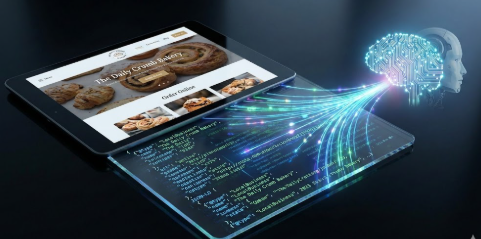
We have to stop building websites just for human eyes and start building them for robot brains. The language we use to do this is called Schema Markup (or Structured Data).
Think of Schema like a label maker for your code.
To a human, your website says: “We are open 9-5.” To an AI without Schema, that is just text. It might be hours, it might be a price, it might be a street address number.
With Schema, you wrap that text in code that effectively tells the AI: <openingHours> 09:00-17:00 </openingHours>.
Suddenly, the AI understands. It can confidently tell the user, “Yes, they are open right now.”
This isn’t just theory. Websites that use advanced Schema Markup are essential for Large Language Models (LLMs) to understand context. The clearer you make your data, the more likely these new “Search Engines” will recommend you (Source: Schema App).
Actionable Steps: Optimizing for the Machine
I know this sounds technical. But you don’t need to be a coder to get this right (that’s what we are here for). However, you do need to understand the strategy.
Here is your checklist for 2026:
1. Structure Your “Entities,” Not Just Keywords
Keywords are dying. “Entities” are the future. An entity is a thing—a person, place, or concept. Google and AI agents want to know who you are, not just what words you use.
- Action: Ensure your “About Us” page is robust. Clearly state who founded the company, where you are located, and what industry accreditations you hold. This builds “Authority” in the eyes of the AI.
2. Make Your Pricing and Availability Visible
If an AI agent is trying to buy on behalf of a user, it hits a wall if it can’t see the price. “Call for a Quote” is a death sentence for AI optimization.
- Action: Wherever possible, list starting prices or flat rates. If you use a booking system (like Calendly or specialized industry software), ensure it allows API access so bots can check availability without filling out a captcha.
3. Optimizing for “Answer Engine” Snapshots
AI overviews often pull a direct answer from a single source. To be that source, your content needs to be direct.
- Action: Structure your blog posts with direct questions as headers (H2s) and direct, concise answers immediately following.
- Bad: “When considering the manifold options for plumbing…”
- Good: “The average cost to snake a drain in Pennsylvania is $150–$300.”
The “Human” Element: Why Brand Authority Still Wins
Reading this, you might feel like we are turning into robots. But here is the paradox: The more AI takes over search, the more valuable your human brand becomes.
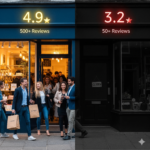
AI agents are programmed to avoid risk. They look for “verified” sources. If your business has consistent reviews, active social media profiles, and a real physical presence, the AI trusts you.
A generic, AI-generated website with no real photos and no real address will get filtered out. Authenticity is your shield against the algorithm.
Key Takeaways for 2026
- Search is becoming “Action”: Users aren’t just looking for links; they are using AI agents to perform tasks like booking and buying.
- Zero-Click is the Norm: Expect 60%+ of searches to end without a click to your site. You need to optimize for visibility in the answer, not just traffic.
- Schema is Mandatory: Structured data is the language AI agents speak. If your site doesn’t have it, you are mute.
- Transparency Wins: “Call for Quote” friction will hurt you. AI agents prioritize transparent pricing and real-time availability.
- Brand = Trust: As AI content floods the web, being a verified, authentic human business is your greatest SEO asset.
Frequently Asked Questions
1. Will AI agents completely replace traditional Google Search? Not completely, but they will take a massive chunk of the market. Informational searches (recipes, quick facts) and transactional searches (booking appointments) will move to AI. However, discovery searches (browsing for inspiration) will likely remain visual and web-based for a long time.
2. Do I need to learn to code to add Schema Markup? No. Most modern website platforms (WordPress, Shopify, Wix) have plugins or built-in tools that handle basic Schema. However, for “Agent-Ready” detailed schema (like Service availability), you may need a specialist to configure it correctly.
3. If users don’t click my website, how do I make money? This is the hardest mindset shift. You need to optimize for “Platform conversions.” If Google Maps or an AI agent displays your phone number and hours, and the customer walks into your store, that’s a win—even if they never visited your .com. We measure success by leads and revenue, not just web hits.
4. Is “Voice Search” the same as “AI Agents”? They are cousins, but not twins. Voice search (Alexa/Siri) usually just reads a snippet of text. AI Agents are smarter; they can interact with apps, fill out forms, and make decisions based on your criteria.
5. When should I start making these changes? Yesterday. The AI transition is happening faster than the mobile transition did. Start by auditing your current website’s structured data and ensuring your business information is crystal clear across the web.
GBP LInk – https://g.co/kgs/GR8yH4a
LinkedIn – https://www.linkedin.com/company/business-solutions-marketing-group-llc/?viewAsMember=true
Instagram – https://www.instagram.com/business_solutions_mg/
Twitter – https://x.com/BSMGLLC
Facebook – https://www.facebook.com/BusinessSolutionsMarketingGroup
BlueSky: https://bsky.app/profile/bussolutions.bsky.social
TikTok – https://www.tiktok.com/@linda_donnelly
YouTube – https://www.youtube.com/channel/UC4w357-txvxOaHff2hTfSSg