Introduction
As AI transforms how users search and interact with information, traditional SEO strategies are rapidly becoming outdated. This article is designed for marketers and business owners who want to stay ahead in the evolving landscape of AI search optimization for 2026. We’ll cover why zero-click searches are rising, how to make your business AI-readable, and what new metrics matter most for success. You’ll also learn about the Gold Marketing Program—a comprehensive approach to thriving in the AI-driven search era.

The Death of the Click? Why Your Old SEO Playbook is Leaking Revenue
If you’ve noticed your organic traffic numbers dipping despite your rankings staying steady, you aren’t imagining things. You’re feeling the weight of a new reality in AI search optimization for 2026. According to the latest data from SparkToro, a staggering 60-65% of all Google searches now end without a single click. This trend is known as zero click searches, where users get answers instantly from AI summaries without visiting websites.
More than half of the people searching for your industry are getting their answers directly on the Google results page and leaving. As search behavior evolves, this shift means customers are interacting with companies online in new ways. Companies must adapt their strategies to remain visible to potential customers in this new landscape shaped by AI summaries and zero click searches. They never see your beautiful website. They never read your carefully crafted “About Us” page. They get what they need from an AI Overview and move on with their day.
It’s a bitter pill to swallow for those of us who have spent years building digital authority. Gartner has even predicted that organic search traffic will drop by another 25% by the end of 2026 as AI-powered search engines take over. But I’m not here to tell you to give up. In fact, I’m here to tell you that for the smart business owner, this is actually an incredible opportunity!
How AI Search Optimization in 2026 Is Changing the Game
By 2026, the emphasis of AI search optimization will transition from keywords to directly answering high-intent user needs. AI search optimization, also known as Generative Engine Optimization (GEO) or AI Optimization (AIO), is aimed at structuring digital content for AI understanding and citation. The focus is shifting from keyword-based ranking to “Search Everywhere Optimization,” emphasizing user trust and intent. Instead of simply ranking for keywords, businesses must ensure their content is included in AI-generated summaries and direct answers. Structured and machine-readable content will be critical for AI applications to effectively parse and cite information. The goal is to ensure that AI systems can easily trust, understand, and cite your digital content, making your business visible in the new AI-driven search landscape.
Now that you understand the shift in AI search optimization for 2026, let’s look at why less traffic can actually be more valuable.
The Filtered Lead: Why Less Traffic is Actually Better
AI Overview and User Intent
Here is the secret most marketers are missing: The clicks that do survive the AI filter are more valuable than they have ever been. User engagement is now measured by the depth of interaction after the AI filter, as only the most motivated users proceed beyond the search results.
When Google’s AI Overview answers a generic question—like “what is a negative review”—it is designed to address common user questions directly in the search results, satisfying the “curiosity seeker.” That person was never going to buy from you anyway. They just wanted a definition. By answering them on the search page, Google is doing you a favor. They are filtering out the “window shoppers.”
Conversion Rate Trends
The users who actually click through to your site in 2026 are the ones who need deep expertise. They are high-intent. They are ready to convert. They’ve read the AI summary and decided they need a human professional to handle the job. According to Search Engine Journal, businesses focusing on high-intent long-tail keywords are seeing conversion rates increase by up to 15%, even as raw traffic volume fluctuates. This shift ultimately drives more qualified sales opportunities for businesses.
Implications for Marketers
For marketers, this means focusing on quality over quantity. The leads that reach your site are more likely to convert, making each visit more valuable than ever before.
Now that we understand why less traffic can be more valuable, let’s explore how to make your business visible to AI systems.
Making Your Business “AI-Readable”
What Is AI Search Optimization?
AI search optimization, also known as Generative Engine Optimization (GEO) or AI Optimization (AIO), is aimed at structuring digital content for AI understanding and citation. Structured and machine-readable content will be critical for AI applications to effectively parse and cite information. The goal is to ensure that AI systems can easily trust, understand, and cite your digital content.
Structured Data and Schema
If Google is going to answer questions using your data, you need to make sure its AI actually understands who you are and what you do. We’ve moved past simple keywords. We are now in the era of “Entity-Based SEO.” Generative AI and large language models are transforming the way search engines process and display information, shifting from traditional keyword matching to synthesizing data from multiple sources and platforms to answer user queries directly.
To win, you have to optimize for AI Readability. This means:
- Structured Data (Schema): Giving the AI a “cheat sheet” of your business details.
Digital Citations
- Digital Citations: Ensuring your name, address, and phone number are identical across the entire web.
Authoritative Content
- Authoritative Content: Writing like an expert, not a robot. AI can spot “generic” content a mile away and it will ignore it! Leveraging AI-assisted content and scalable content production can help create high-quality material that meets the standards of AI algorithms and enhances your authority in AI-generated search results.
Companies should use AI and keyword research to optimize content for different models and platforms, ensuring their material is relevant and easily discoverable in AI-powered search environments. Ongoing testing and fine-tuning of AI algorithms can help identify and address gaps in authority, trust signals, and relevance, allowing businesses to adapt their strategies as generative AI and large language models continue to evolve how queries are processed and answers are delivered.
With your business optimized for AI readability, the next step is to implement a comprehensive strategy—like the Gold Marketing Program—to maximize your results.
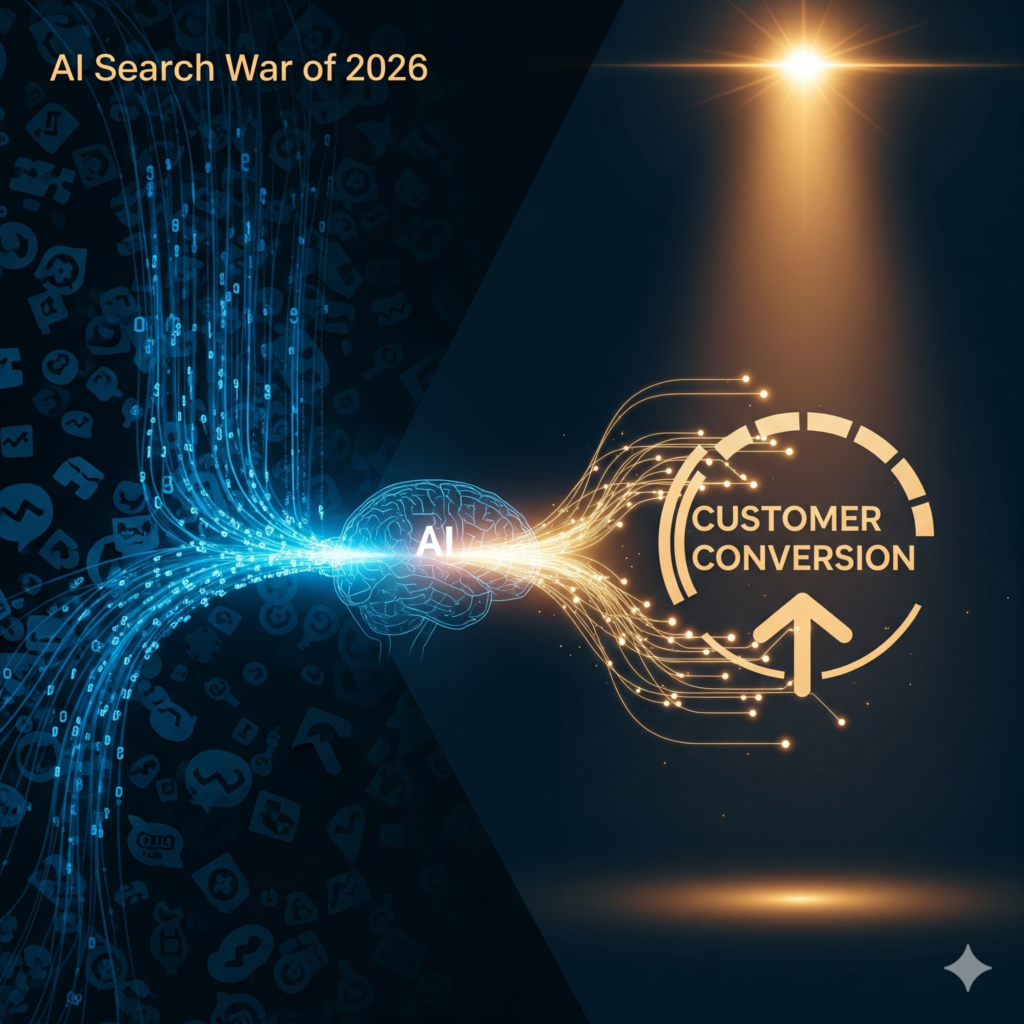
The Gold Marketing Program: Your AI Shield
AI Rankability Explained
I realized a few years ago that our clients needed more than just a standard SEO package. They needed a strategy built for the AI era. That is why we developed our Gold Marketing Program. The program is designed to ensure your content is displayed prominently in AI-driven search results and summaries, maximizing your visibility as AI search optimization evolves toward 2026.
We didn’t just tweak our old methods; we rebuilt them. The Gold Marketing Program focuses on two distinct pillars:
- AI Rankability: We optimize your digital footprint so that when a user asks an AI “Who is the best marketing group in my area?”, your name is the one it recommends.
High-Intent Conversion Strategies
- High-Intent Conversion: Since we know traffic is becoming more exclusive, we focus on making sure every single person who lands on your site is met with a high-conversion experience. The program includes specialized services and follows industry best practices to maximize results in search engine marketing, video marketing, and lead generation.
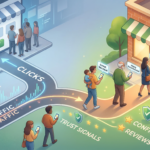
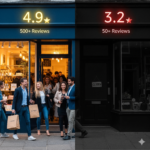
We aren’t just chasing “hits” anymore. We are chasing revenue. We use deep technical SEO to ensure your site is perfectly indexed for AI models, while simultaneously building the “Trust Signals” (like those Google reviews we talked about!) that make a human being want to pick up the phone. Strategic thinking is at the core of our approach, helping you adapt to the rise of AI chatbots and other emerging AI technologies that are transforming how content is discovered and engaged with online.
With a comprehensive strategy in place, it’s essential to know how to measure your success in this new AI-driven environment.
Measuring Success in AI Search
Traditional Metrics vs. AI Metrics
Measuring success in the age of AI search requires a new playbook—one that blends the best of traditional SEO with the emerging realities of generative engine optimization. As AI tools and search engines evolve, relying solely on old metrics like keyword rankings or raw search traffic can leave marketing teams blind to what’s really driving results.
Today, success means tracking both the familiar and the new. Yes, you should still monitor your organic traffic, click-through rates, and conversions from marketing campaigns—these remain vital indicators of how well your site is performing in traditional search engines.
Tracking AI Visibility
But in the AI era, you also need to measure your visibility and authority within AI-generated content and summaries. This includes tracking:
- How often your brand is cited in AI Overviews
- The quality and authority of your digital footprint
- Engagement and conversion rates from high-intent leads
By combining these metrics, you can get a complete picture of your performance in both traditional and AI-driven search environments.
Key Takeaways
- Zero-Click Reality: 65% of searches stay on Google. You must win the “Search Result Page” before you win the “Website Visit.”
- Traffic Quality > Quantity: Expect a 25% drop in total traffic, but focus on the 15% increase in conversion value from the leads that remain.
- Entity Optimization: AI ranks “entities,” not just keywords. Your brand authority is your new SEO. For example, professionals with access to advanced SEO tools can optimize entity data to reach their target audience more effectively.
- AI Readability: If AI can’t parse your data, you don’t exist in 2026.
- High-Quality Content: High-quality articles and content remain essential for engaging both AI and human audiences, ensuring your message reaches and resonates with your intended audience.
- The Gold Program: Business Solutions Marketing Group provides the blueprint for ranking in the AI age.
10 Common Questions About AI Search & SEO
1. Is SEO dead because of AI?
Not at all. It’s just evolving. You are now optimizing for AI engines as much as human ones.
2. What is a “Zero-Click Search”?
It’s when a user finds their answer in a Google snippet or AI Overview and doesn’t need to click a link.
3. Will my traffic really drop by 25%?
Industry experts like Gartner predict this, but high-quality, expert-led sites will see the least impact. Changes in Google search and the way websites are displayed—such as more prominent AI Overviews and featured snippets—can significantly affect how much traffic actually reaches your site.
4. How do I get into an AI Overview?
By providing clear, concise, and structured answers to specific consumer questions. It’s also important to continually test and refine your content to improve your chances of being featured.
5. How do data brokers affect SEO insights?
Access to user behavior data, like clickstream data generated on websites, is often restricted by data brokers and other entities. This makes it harder to develop accurate SEO strategies without privileged access to this valuable information.
6. What is the Gold Marketing Program?
It’s our specialized service at Business Solutions Marketing Group designed to optimize for AI “rankability” and high-intent conversions.
7. Does social media help SEO in 2026?
Yes! It builds your “Entity” authority and tells AI that real humans are talking about your brand.
8. Is “long-form” content still worth it?
Yes, because AI uses long-form content to learn about your expertise, even if it only quotes a snippet.
9. Can AI detect if I used AI to write my blog?
Yes, and Google’s E-E-A-T guidelines prioritize content with “Experience” and “Expertise” which AI-only writing lacks.
10. Should I stop paying for Google Ads?
No. Ads are often displayed above AI Overviews, making them more valuable as organic space shrinks.
How do I start?
Focus on your brand’s “Digital Footprint.” Make sure your information is accurate and authoritative everywhere.
GBP LInk – https://share.google/C8gU1JB3P6mPKWplN
LinkedIn – https://www.linkedin.com/company/business-solutions-marketing-group-llc/?viewAsMember=true
Instagram – https://www.instagram.com/business_solutions_mg/
Twitter – https://x.com/BSMGLLC
Facebook – https://www.facebook.com/BusinessSolutionsMarketingGroup
BlueSky: https://bsky.app/profile/bussolutions.bsky.social
TikTok – https://www.tiktok.com/@linda_donnellyYouTube – https://www.youtube.com/channel/UC4w357-txvxOaHff2hTfSSg