Introduction to Online Reputation Management
In today’s digital-first world, your online reputation can make or break your business. With just a single negative review, your Google Business Profile can quickly become a red flag for potential customers, even if the rest of your service is stellar. That’s why understanding how to manage your online reputation—especially on Google—is more important than ever.
Google reviews are often the first thing people see when they search for your business. Whether it’s a glowing testimonial or an inappropriate review that doesn’t reflect your actual service, every review shapes your business profile and influences the decisions of future customers. The good news? Google provides tools to help you report and remove reviews that violate their policies, ensuring your online reputation remains a true reflection of your brand.
By staying proactive and learning how to handle negative reviews, report fake or inappropriate content, and maintain a positive presence, you can protect your business profile and keep your reputation working for you—not against you.
Understanding Google Business Profile
Your Google Business Profile is the digital front door to your business. This free tool from Google lets you manage how your company appears across Google Search and Google Maps, giving you control over the information potential customers see. A well-maintained business profile not only showcases your services and contact details but also allows you to engage directly with customer reviews.
Optimizing your Google Business Profile is essential for local SEO. The more complete and accurate your profile, the higher your chances of appearing in local search results when customers are looking for services like yours. Actively managing your reviews—responding to feedback, addressing concerns, and highlighting positive experiences—can significantly boost your search visibility and help your business stand out in Google’s local search and Maps listings.
Remember, your business profile isn’t just a static listing; it’s a dynamic tool that, when managed well, can drive more customers to your door and improve your reputation in search results.
The Anatomy of a Five-Star Comeback
That’s what I hear all too often. They’re great at what they do, their customers actually love them, but their online rating tells a completely different story. Bad reviews can quickly damage a brand’s reputation, even when the majority of feedback is positive. It’s frustrating. It’s disheartening. And it is costing them money.
I’m Linda Donnelly, and I’ve spent over a decade helping small businesses navigate the choppy waters of marketing. If there’s one thing I’ve learned, it’s this: Your reputation isn’t just a vanity metric; it is your single most important conversion tool.
Think about it. When was the last time you bought anything online—from a new restaurant to a plumbing service—without checking the reviews first? Exactly. You check. We all do.
The latest data from BrightLocal shows that 93% of consumers say online reviews impact their purchasing decisions (Source: BrightLocal). That is almost every single person! Bad reviews can seriously harm your brand’s reputation and cause you to lose customer trust. A negative review is not just a digital eyeroll; it is a brick wall standing between you and a new customer.
This is the story of how we took a business that was drowning under the weight of unfair reviews and gave them the 5-star comeback they deserved.
Part 1: The Invisible Anchor
This client—let’s call them “Acme Plumbing”—had fantastic service. Their phone was always ringing, and they did clean, expert work. But if you looked at their Google Business Profile, they were sitting at a mediocre 3.8 stars.
Why? Because two years ago, a disgruntled former employee—someone who had been fired for stealing—decided to get “revenge.” They created multiple fake accounts and posted a series of scathing, malicious, 1-star negative Google reviews. These “hit job” Google reviews violated Google’s content policies by making false claims that Acme was unprofessional, overpriced, and didn’t finish jobs.
This happens more than you think. Google themselves has noted that fraud and fake reviews are a major problem they are constantly fighting.
For Acme, these reviews were an anchor. They had dozens of genuine 5-star ratings, but those few highly detailed, fake, negative Google reviews were keeping their score down and scaring away anyone who took the time to read them. When a Google review violates Google’s policies, there are steps you can take to remove Google reviews and protect your business. They were losing high-intent customers who needed a plumber right now but chose the competitor with a 4.5+ star rating instead—negative Google reviews can deter high-intent customers and damage your reputation.
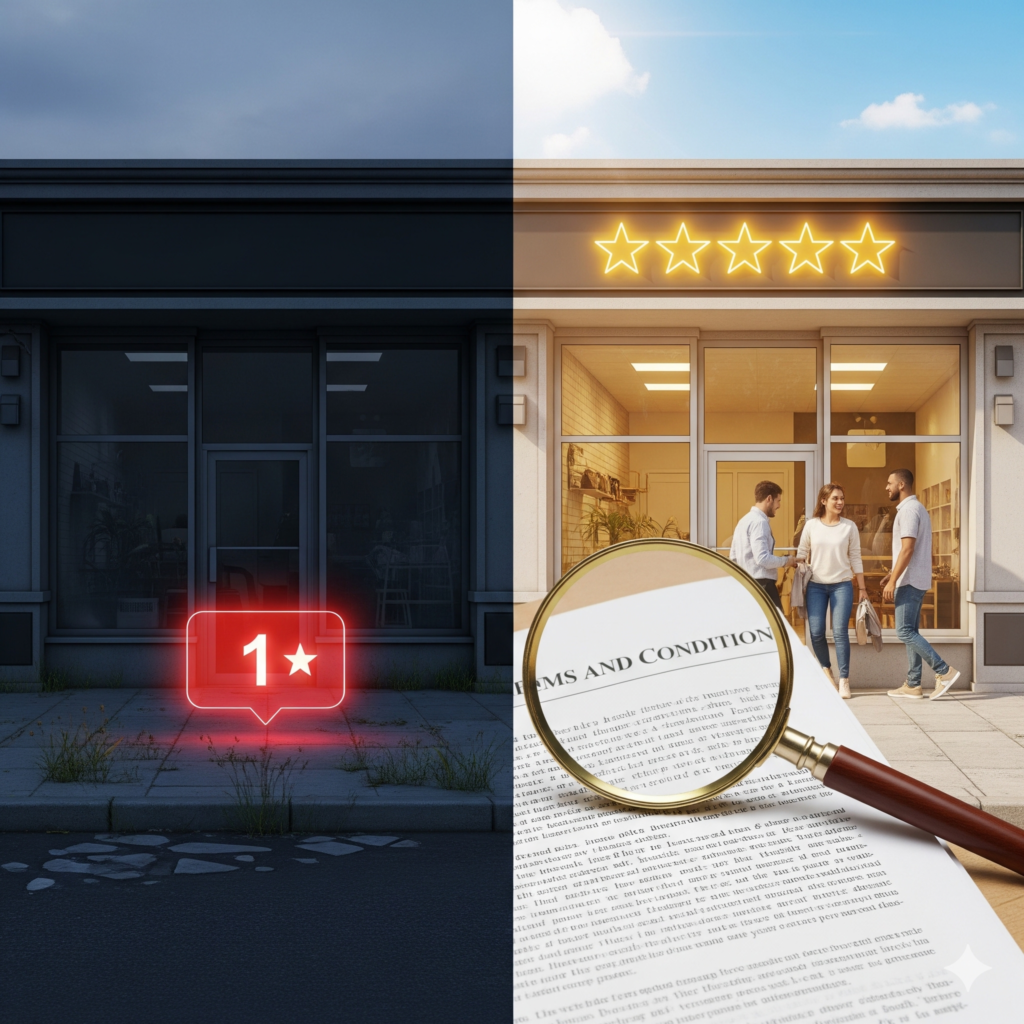
This client was paying for ads and optimizing their SEO, but their conversion rate was abysmal. They were spending money to bring people to a digital storefront with a “broken window.”
Part 2: The Google’s Policies-Compliant Cleanup
When Acme approached us, they thought the only solution was to “drown out” the negative reviews with new positive ones. That is a great strategy for building on a real foundation, but it is not a cure for fake or violating content. It’s like trying to fill a bucket that has a giant hole in it.
Our first step wasn’t to write reviews; it was to pick up a magnifying glass.
As an expert, I know the real, deep-down truth: Google is actually on your side here. They want to provide helpful, trustworthy information to searchers. Reviews that are fake, spammy, harass, or are based on a conflict of interest don’t help anyone—they harm the user experience.
We conducted a forensic audit of Acme’s negative reviews, matching each one against Google’s very strict “Prohibited and Restricted Content” policy. As part of this process, you must flag the review and report review violations using Google’s tools to initiate the review removal process.
| Google’s Content Policy | Violating Review (Example from Acme) |
|---|---|
| Conflict of Interest: No reviews from employees, competitors, or for personal gain. | A review mentioning private, proprietary “company procedures” from a user name suspiciously similar to the ex-employee’s handle. |
| Spam/Fake Content: Reviews that don’t reflect a real experience. | Three reviews posted on the same day from different “generic” accounts, all using identical phrasing about a “nightmare job.” |
| Harassment/Profanity: Attacks on individuals or groups. | A review that called the owner a personal, highly insulting name, irrelevant to the plumbing work. |
Note: Only reviews that violate Google’s policies—such as those containing hate speech or clear policy violations—are eligible for removal.
We didn’t just “flag and pray.” For each policy violating review, we built an evidence-based case. We provided documentation (where compliant) of the ex-employee’s actions, highlighted the clear pattern of spam, and referenced the exact section of Google’s policy that was being breached. We submitted a removal request for each review for removal and tracked the status of each request through Google’s system.
When appealing a rejected decision, we used the official appeal form, recorded the case ID provided by Google, and regularly checked status to monitor progress and respond as needed.
This is tedious work. It requires persistence. Google considers various factors when reviewing a policy violation, and you may need to escalate your request if the initial report is rejected. Before you report the review, it’s important to respond to the review with a professional response—this demonstrates credibility and care, and is a key part of how you manage reviews, whether legitimate or fake.
But for Acme, we were able to successfully have five major, fake, negative reviews removed. Keep in mind, having a fake review removed can take time, so maintain a professional response throughout the process.
Avoiding Conflict of Interest
When it comes to online reviews, authenticity is everything. Google’s policies are clear: businesses must avoid any conflict of interest when managing their reviews. This means you should never post reviews about your own business, ask employees or family members to leave positive reviews, or offer incentives in exchange for glowing feedback. Similarly, reviewing your competitors to sway public opinion is strictly off-limits.
Staying above board ensures your positive reviews are genuine and your online reputation remains trustworthy. Not only does this protect your business from potential penalties or review removals by Google, but it also builds real credibility with prospective clients. By focusing on authentic customer feedback and steering clear of any conflict of interest, you’ll foster a reputation that stands up to scrutiny and supports your long-term success.
Understanding Local Search
Local search is the engine that drives customers to businesses in their area—and Google reviews are a key factor in how your business ranks. When someone searches for services you offer, Google’s algorithm considers the quality and quantity of your online reviews, as well as the completeness of your Google Business Profile, to determine where you appear in local search results.
A steady stream of positive online reviews can dramatically improve your search visibility, making your business more likely to show up in the coveted local search “Map Pack.” By actively managing your business profile, encouraging satisfied customers to leave reviews, and responding thoughtfully to feedback, you can climb the local search rankings and attract more customers from your community.
Understanding how local search works—and the role reviews play—empowers you to take control of your online presence and ensure your business is seen by the right people at the right time.
Part 3: The Rise
The moment those violating reviews disappeared, something amazing happened. Acme’s 3.8 stars jumped instantly to a beautiful, clean 4.6-star rating.
They were no longer “just okay.” They were “highly recommended.”
We didn’t change their SEO strategy. We didn’t increase their ad spend. We just removed the barrier.
The results were immediate and almost hard to believe. They told me stories about how their phone started ringing again. Not just price-shoppers, but people who said, “I saw your great reviews and knew I needed to call you.”
- Conversion Rate Skyrocketed: Their cost-per-lead dropped dramatically because the people clicking on their ads were finally converting into paying customers.
- Team Morale Returned: The crew felt pride in their work again because the public perception finally matched the actual service they were providing.
- Google Algorithm Love: Google’s local search algorithm favors businesses with high scores and consistent activity. Acme started appearing more often in the coveted “Map Pack” for plumbing searches in their area.
This wasn’t about “hiding the truth.” It was about ensuring that when a customer did their 3-second “reputation check,” they were seeing an accurate, fair, and rule-compliant representation of what Acme Plumbing actually was.
Common Mistakes to Avoid
Managing your Google reviews is a powerful way to shape your online reputation, but there are pitfalls to watch out for. One of the biggest mistakes is responding emotionally or aggressively to negative reviews, which can escalate the situation and turn off potential customers. Ignoring positive reviews is another missed opportunity—acknowledging happy customers shows you value their feedback and encourages others to share their experiences.
Failing to report fake or inappropriate reviews can also harm your business profile. Use Google’s reviews management tool to flag content that violates policies, and don’t hesitate to submit a one-time appeal if your initial report doesn’t result in removal. Timely, professional responses and proactive review management are key to maintaining a positive online reputation.
By avoiding these common errors and staying vigilant, you’ll ensure your Google Business Profile accurately reflects your brand and continues to attract new business.
Key Takeaways for Review Management
- Your reputation is your #1 conversion tool. Period. 93% of buyers agree.
- Google is not your enemy. Their terms and conditions protect you from unfair and malicious content.
- Fake/violating reviews can be removed. You don’t just have to live with a “hit job.” It just requires professional-grade effort and persistence.
- The rise is real. Fixing your reputation has a direct, quantifiable impact on your leads, sales, and conversion rate.
Top 10 Common Questions & Answers About Online Reputation Recovery and Negative Reviews
- Is it legal to remove a negative review? Yes, absolutely, as long as you are complying with the host platform’s (e.g., Google, Yelp) Terms of Service. You have the right to challenge reviews that are fake, contain conflict of interest, harass, or use profanity.
- Can’t I just post a rebuttal and hope for the best? Rebuttals are a great strategy for a legitimate negative review where a real customer had a real bad experience. For fake or violating content, a rebuttal can sometimes just draw more attention to the negativity. Your priority for violating content should be removal.
- Will removing reviews get my business banned? If you follow the platform’s official flagging and appeals process, no. What gets you banned is trying to manipulate reviews by buying fake positive ones.
- How long does it take for Google to remove a review? It varies wildly. Sometimes a clear violation is removed in 48 hours. For more complex cases requiring appeals, it can take weeks or even months of persistent follow-up.
- Can I pay someone to remove negative reviews? Yes, you can hire reputation management professionals (like us!). We handle the audit, documentation, flagging, and the extensive appeals process, saving you the time and frustration.
- What is the “Five-Star Effect”? It’s that tipping point (often around 4.2–4.5 stars) where your leads and conversions start to grow exponentially because the market considers you a “trusted authority.”
- What are the most common reasons a review can be removed? According to Google’s policies: Conflict of Interest (employee, competitor), Spam/Fake Content (not a real customer), and Harassment/Profanity.
- Does my star rating affect my local SEO? Yes. Google’s local algorithm definitely favors businesses with higher star ratings and more recent activity.
- Should I always ask for reviews? Yes! Building a buffer of genuine 5-star reviews is vital. If your customers love you, give them an easy way to say so!
What is my legal right regarding fake reviews? Platforms like Google have an interest in removing fake reviews to maintain user trust. As a business owner, your primary legal right is to enforce the platform’s own rules to protect your professional image.
GBP LInk – https://share.google/C8gU1JB3P6mPKWplN
LinkedIn – https://www.linkedin.com/company/business-solutions-marketing-group-llc/?viewAsMember=true
Instagram – https://www.instagram.com/business_solutions_mg/
Twitter – https://x.com/BSMGLLC
Facebook – https://www.facebook.com/BusinessSolutionsMarketingGroup
BlueSky: https://bsky.app/profile/bussolutions.bsky.social
TikTok – https://www.tiktok.com/@linda_donnellyYouTube – https://www.youtube.com/channel/UC4w357-txvxOaHff2hTfSSg