Imagine a potential customer standing on a street corner in downtown Harrisburg.
They pull out their phone. Five years ago, they would have typed “coffee shop near me” into Google Maps. Today? They are opening ChatGPT or Google Gemini and asking:
“I need a quiet coffee shop within walking distance that has oat milk lattes, good Wi-Fi, and isn’t too crowded right now. What do you recommend?”
The AI pauses for a millisecond. Then, it gives one recommendation.
Localized SEO for LLMs is now the norm. AI agents are no longer just passive tools—they actively make decisions on behalf of users, providing a single answer instead of a list of links. This shift means your business must be visible, relevant, and trustworthy to these AI agents, or you risk being left out entirely.
If your business isn’t the one the AI trusts enough to recommend, you didn’t just lose a click. You lost a customer. You lost revenue. You lost visibility.
We are witnessing the death of the “list of ten links” and the birth of the Single Best Answer.
Generative AI is changing how users search, leading to declining click-through rates for many websites. However, local search is seeing steady performance, making it more important than ever to optimize for local visibility.
This guide is for local business owners, marketers, and agencies looking to adapt their SEO strategies for the AI-driven search era. The topic matters now because the rise of AI-powered search and LLMs is fundamentally changing how customers discover and choose local businesses, making it essential to update your approach or risk being left behind.
Localized SEO for LLMs drives high-intent, geo-targeted traffic to your website, which is crucial for lead generation management systems in the AI era. In 2026, localized SEO for local lead generation management systems has evolved into an intent-driven, AI-aware framework that prioritizes immediate conversions over simple keyword rankings. By investing in visibility across platforms and maintaining accurate business data, you ensure your business is positioned to capture and convert high-intent local searches.
I’m Linda Donnelly, owner of Business Solutions Marketing Group.
For over a decade, I’ve helped small businesses dominate their local markets. I’ve seen the rise of Google Maps. I’ve seen the fall of the Yellow Pages. But what is happening right now in 2026 is a fundamental shift in how machines understand the physical world.
This is the era of Localized SEO for Large Language Models (LLMs).
It isn’t just about keywords anymore. It’s about teaching an AI who you are, what you do, and why you are the best choice. If your online presence is messy, inconsistent, or thin, the AI will ignore you. It has to be confident to recommend you.
In this guide, I’m going to break down exactly how LLMs reshape local results, why “Entity Strength” is your new credit score, and how to build the high-trust signals that get you cited in the AI answer.

Introduction to Localized SEO
Localized SEO is the backbone of digital marketing for local businesses aiming to stand out in their communities. At its core, local SEO is about making sure your business appears prominently in local search engine results when potential customers are looking for services you offer nearby. For law firms, medical practices, restaurants, or any business with a physical presence, this means optimizing your website and online profiles so that you’re the obvious choice when someone searches for help in your area. Effective local SEO strategies include using location-specific keywords in your content, building strong local citations on trusted directories, and ensuring your business information is accurate everywhere it appears online. By focusing on these elements, local businesses can boost their visibility in local search, attract more foot traffic, and ultimately grow their client base.
Understanding Local Queries
Local queries are the foundation of how people find businesses in their area. These are search engine queries that include specific locations—think “personal injury lawyer in Philadelphia” or “best pediatrician near Atlanta.” Understanding the intent behind local queries allows businesses to tailor their content and SEO strategies to match what real customers are searching for. By researching and targeting the right local queries, you can improve your local search rankings and ensure your business appears when it matters most. Tools like Google Keyword Planner can help you discover which local queries are most relevant to your services, so you can create content that directly addresses the needs of your community. Focusing on these targeted keywords not only boosts your search rankings but also connects you with customers who are ready to take action.
How LLMs “See” Your Local Business
To win this game, you have to understand the player.
Traditional search engines (like old Google) were indexers. They scanned pages for keywords like “plumber” and “Harrisburg” and matched them.
LLMs (like Gemini, ChatGPT, and Claude) are understanding engines. They don’t just match words; they understand concepts. They pull from entities, schema, and high-trust signals to build a mental model of your business. Structured data markup helps AI systems like ChatGPT and Gemini understand and accurately represent your business. Structured data is essential for AI systems to deliver accurate and relevant information about local businesses, and LLMs treat structured data as a source of truth—missing or incomplete data can lead to competitors being favored.
The “Confidence Score”
When an LLM decides which business to include in an answer, it assigns a “Confidence Score” to the information it finds.
Here’s how the AI evaluates your business:
| Low Confidence | High Confidence |
|---|---|
| – Your hours are different on Facebook vs. Google. | – Your Name, Address, and Phone (NAP) are identical across 50 directories, demonstrating strong NAP consistency. |
| – Your website says you do “HVAC,” but your reviews mention “Plumbing.” | – Your schema markup clearly defines your services. |
| – The AI gets confused. It skips you. | – Your reviews mention specific attributes like “emergency service.” The AI trusts you. It recommends you. |
Consistent information across the web gives AI models confidence. That is the golden rule of 2026.
Absolute NAP Consistency means ensuring your Business Name, Address, and Phone number are identical across your website, social media, and all directories.
The Three Pillars of LLM Optimization: Entities, Schema, and Signals
You don’t need to be a coder to understand this. Think of it like building a house.
A successful content strategy must adapt to evolving AI search algorithms and trends, ensuring your content remains relevant as search technology advances. Understanding AI search algorithms is crucial for optimizing content effectively, as it allows you to align your strategy with the latest AI-driven search developments.
1. Entity Strength (The Foundation)
To an AI, your business isn’t a website; it’s an Entity. An entity is a known “thing” in the AI’s database. It knows that “The Hershey Company” is an entity located in Pennsylvania that makes chocolate.
Does it know your business is an entity?
- Citations: Get listed in high-trust directories (Chamber of Commerce, BBB, Yelp), as well as through data aggregators and directory listings, which are important sources for building entity strength.
- Press: Get mentioned in local news articles.
- Consistency: Ensure your business data is uniform everywhere.
Local SEO is essential for businesses to be discoverable across various platforms and data aggregators.
Improving your entity strength helps you appear more often in both organic search and AI-generated summaries. It tells the AI, “I am real, I am established, and I am important.”
2. Schema Markup (The Blueprints)
Schema is code you put on your website that speaks directly to the AI. It says: “This is a review. This is a price. This is an opening hour.” Adding structured data and using key schema types is essential for helping search engines and LLMs understand your business, location, and services. Structured data markup can enhance local SEO by making business information clearer to search engines.
Structured data is a standardized format (such as JSON-LD) that helps search engines and large language models (LLMs) understand and surface local businesses in search results by providing explicit business details. Large language models (LLMs) rely on structured data to understand and surface local businesses in search results. Structured data is essential for improving how search engines interpret and display business information, and it helps AI systems understand and showcase business details effectively.
Structured data uses standardized vocabulary within html code to highlight essential details such as reviews, contact info, and event specifics. Without Schema, the AI has to guess. With Schema, you are spoon-feeding it the answers and making your business information more accessible.
- LocalBusiness Schema: Implement detailed structured data on location pages using LocalBusiness Schema (JSON-LD) to help search engines identify your business type, location, and services. Define your service area.
- Review Schema: Highlight your 5-star ratings.
- FAQ Schema: Answer common questions directly in the code.
Implementing structured data can enhance the appearance of search results with rich snippets and individual listings, leading to higher click-through rates. Rich results generated from structured data can make your business stand out in competitive local search results by providing additional information. Google emphasizes the importance of structured data in delivering relevant information to users, and while it is not a direct ranking factor, it enhances visibility and engagement, which can impact rankings indirectly.
3. High-Trust Signals (The Curb Appeal)
This is what humans see, but AI reads it too.
- Reviews: AI reads the text of your reviews. If people keep saying “fast service,” the AI learns you are “fast.”
- Natural Language Content: Stop keyword stuffing. Write like a human. Answer questions in full sentences. The AI prefers content that sounds conversational. Providing relevant information and reflecting local community needs increases the likelihood of being recognized by LLMs as relevant. Leverage conversational content by structuring your pages to answer natural language questions in the first 2-3 sentences.
Technical Factors for Local SEO
Behind every successful local SEO campaign are technical factors that help your website perform well in search engine results. For local businesses, having a fast-loading website is crucial—slow sites can drive potential customers away before they even see your services. Mobile-friendliness is equally important, as most local searches now happen on smartphones. Secure your site with SSL encryption to build trust and protect user data, which search engines also reward with better rankings. As voice search becomes more popular, optimizing your site for natural language queries ensures you’re visible when users ask their devices for recommendations. By addressing these technical aspects, you lay a strong foundation for your local SEO efforts and make it easier for customers to find and trust your business.
Mobile Optimization
Ensure your website is fully responsive and provides a seamless experience on all devices. Most local searches are performed on mobile, so a mobile-optimized site is essential for both user experience and search rankings.
Site Speed
A fast-loading website reduces bounce rates and keeps potential customers engaged. Use tools like Google PageSpeed Insights to identify and fix speed issues.
SSL Security
SSL encryption (HTTPS) not only protects user data but also signals trustworthiness to search engines, which can improve your rankings.
Why Traditional Local SEO Still Matters (But isn’t Enough)
Don’t delete your Google Business Profile just yet.
Traditional local SEO still drives search visibility for older demographics and map-based searches, and remains essential for appearing in local search results and on the search engine results page. Maintaining strong local SEO fundamentals, such as reviews and directory listings, is crucial even in the AI era. Achieving a competitive edge means optimizing for both Google and other search engines, as well as for AI-generated responses. Local SEO gives your business structure and stability, while AI provides new visibility opportunities—when done right, both approaches enhance each other.
- Old Way: Rank for “Pizza Shop.”
- New Way: Rank for “Best pizza shop for a large birthday party with vegan options.”
The AI needs context. It needs to know not just what you sell, but how you sell it. This comes from detailed service pages, blog posts about specific problems, and video content that demonstrates your expertise.
The Role of Business Hours in Local SEO
Accurate business hours are more than just a convenience—they’re a key factor in local SEO success. When potential customers search for services, they want to know if you’re open and available to help. Search engines prioritize businesses with up-to-date business hours, boosting your local search rankings and making your listing more attractive in search results and on directory sites. Inconsistent or missing business hours can lead to confusion, missed opportunities, and even negative reviews if customers show up when you’re closed. Make sure your business hours are consistent across your website, Google Business Profile, and all other directory sites. This transparency not only improves your search rankings but also builds trust with potential customers, increasing the likelihood they’ll choose your business.
The Role of Video in Local Discovery
You might wonder, “Linda, why are you talking about video in an SEO article?”
Because AI models can “watch” videos now. They transcribe the audio. They analyze the visual frames. AI platforms leverage both structured data and video content to improve understanding and provide more relevant, localized results. However, AI platforms still lack reliable location awareness, so proximity remains a key ranking factor in local search.
If you have a video on your Google Business Profile explaining your process, the AI consumes that data. It learns from it.
- Trust Signal: A video proves you are a real business with real people.
- Engagement: People stay on your listing longer to watch it, signaling quality to the algorithm.
Our Video Marketing Program (link) is designed specifically to create these high-trust assets that feed the AI exactly what it needs to verify your expertise.
How to “Train” the AI About Your Brand
You can’t log into ChatGPT and edit its brain. But you can influence what it learns. AI-driven optimization requires monitoring how AI tools interpret your brand, as these systems shape content visibility and user discovery. Tracking AI-specific performance indicators is essential to gauge content effectiveness in AI search results.
1. The “About Us” Page Overhaul
Your “About Us” page is the biography the AI reads. Make it detailed. List your history, your awards, your certifications, and your specific service areas. Link to your professional profiles. Make it the source of truth.
For best results, develop unique, detailed landing pages for each city, neighborhood, or service area, ensuring each page is at least 60% unique to maximize local SEO impact and AI-driven visibility. Generic local pages are less effective; LLMs prefer businesses that demonstrate a real understanding of the communities they serve.
2. The Review Response Strategy
When you reply to a review, you aren’t just talking to the customer. You are talking to the AI.
- Customer: “Great service.”
- Bad Reply: “Thanks.”
- AI-Optimized Reply: “Thank you, Sarah! We are glad we could help fix your leaky water heater in Camp Hill so quickly on a Sunday.”
You just fed the AI three data points: Service (Water Heater), Location (Camp Hill), Attribute (Sunday/Emergency Service).
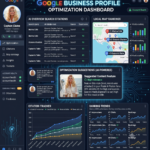
3. Google Business Profile Optimization
This remains the hub. Google’s Gemini AI pulls heavily from Maps data. Google AI Overviews generate summarized search results by highlighting authoritative sources, making it crucial for your business to be recognized as an authority. If your profile is incomplete, the AI assumes your business is incomplete. Establishing human authority and expertise across various online channels is essential to be featured in AI-driven snippets and search summaries. Our Google Business Optimization Pro program (link) ensures every single field—from services to attributes to Q&A—is fully optimized to feed the AI the data it craves.
Common Mistakes in Localized SEO
Even the most well-intentioned businesses can stumble when it comes to localized SEO. Here are the most frequent pitfalls and how to avoid them:
Inconsistent NAP Data
One of the most frequent mistakes is inconsistent NAP (name, address, phone number) data across different platforms, which can confuse search engines and hurt your search engine results. Regularly audit your online presence to ensure your phone number and other business details are accurate everywhere.
Neglecting Local Keywords
Neglecting to use location-specific keywords in your website content makes it harder for search engines to connect your business to relevant local queries. Focus on building content that targets the right local queries for your services.
Weak Local Citations
Failing to build or maintain high-quality local citations can damage your credibility and lower your local search rankings. Focus on building strong local citations on trusted directories.
By steering clear of these common errors, you’ll strengthen your local search presence and make it easier for customers to find and trust your business.
Key Takeaways
If you are ready to future-proof your local visibility, here is your checklist:
- Consistency is Confidence: Ensure your Name, Address, and Phone number are identical across the entire internet.
- Feed the Schema: Use structured data to explain your business to the bots in their own language. Rich results and structured data help your business stand out in local search results by making your listing more visually engaging and prominent.
- Reviews are Data: Encourage specific, descriptive reviews and respond with keywords in mind.
- Context over Keywords: Create content that answers specific, complex questions, not just generic service descriptions.
- Video Verifies: Use video to provide high-trust signals that text alone cannot match.
- Immediate Intent Converts: Local searchers typically exhibit immediate intent; in 2026, localized SEO can convert 1 out of every 2 local searches into a customer.
- Phone Calls Matter: Local searches often lead to phone calls, in-person visits, or service appointments. Phone calls are a key conversion metric for local businesses.
- Voice Search Optimization: Users search differently in the AI era, and voice search optimization is important for visibility in voice queries. Structured data and schema markup help devices like Google Assistant deliver accurate responses to user questions.
Frequently Asked Questions About Localized SEO for LLMs
1. Will AI replace Google Maps?
Answer: Not entirely, but it will layer on top of it. You will likely use an AI assistant to navigate maps in the future. AI-driven search and AI platforms are increasingly shaping how users interact with mapping tools, integrating local business data and recommendations directly into navigation experiences.
2. How do I know if my Schema is working?
Answer: Google provides a “Rich Results Test” tool. You can plug in your URL and see exactly what the bot sees. Implementing structured data markup helps local businesses improve their online visibility in both traditional search results and AI-driven tools by enabling rich snippets and making your business information more accessible to AI systems and platforms.
3. Does ChatGPT crawl my website?
Answer: Yes, via the “Bing” search integration. If you are indexed on Bing, ChatGPT can find you. AI systems like ChatGPT rely on structured data to better understand and showcase your business in search and voice search results.
4. Can I pay to rank in ChatGPT?
Answer: Not organically yet. There will likely be ad models in the future, but currently, recommendation is based on authority and trust. AI-driven search results often consolidate information from top-ranking sources, making it critical to secure high positions for better search visibility.
5. Why does the AI recommend my competitor?
Answer: Likely because they have more “Entity Strength.” They have more citations, more consistent data, and more reviews that the AI trusts. AI tools and AI-driven algorithms weigh these signals heavily when determining which business to recommend.
6. Is voice search the same as LLM search?
Answer: They are cousins. Voice search (Siri/Alexa) often reads a snippet. LLM search synthesizes an answer. Optimizing for natural language helps both, as AI-driven platforms and systems use advanced natural language processing to interpret context and user intent.
7. How often should I update my business info?
Answer: Whenever it changes, immediately. And ideally, post updates (Google Posts) weekly to show activity. Keeping your information current helps AI platforms and search engines understand and trust your business data.
8. Do citations still matter?
Answer: Yes, but quality matters more than quantity. A listing on the Chamber of Commerce is worth 100 listings on random spam directories. High-quality citations improve your entity strength and search visibility in both traditional and AI-driven search results.
9. What is “Entity Search”?
Answer: Searching for a “thing” (brand, person, place) rather than a “keyword.” Google wants to connect users to Entities, not just strings of text. Structured data uses standardized vocabulary to help search engines understand website content better, making your business more discoverable by AI tools and LLMs.
10. Is this relevant for service area businesses (no storefront)?
Answer: Crucial. Since you don’t have a physical pin for people to drive by, your digital entity is the only proof you exist. Structured data markup and strong online signals help AI systems and search engines recognize and surface your business.
11. How does technical SEO impact AI-driven search?
Answer: Technical SEO ensures that AI search engines can efficiently crawl and understand your content. This is essential for both traditional search results and AI-driven platforms, as it helps maximize your search visibility.
12. How do I track my local SEO and AI search performance?
Answer: Tracking AI-specific performance indicators is essential to gauge content effectiveness in AI search results. Tools like Local Falcon help improve local visibility, monitor competition, provide real-time reporting and ranking analysis, offer competitor analysis and multi-location tracking, and help businesses outrank competitors in both traditional and AI-driven search environments.
13. How do LLMs use structured data for local SEO?
Answer: Large language models (LLMs) rely on structured data to understand and surface local businesses in search results. Structured data helps LLMs recognize a business as distinct and legitimate, improving its visibility and authority in AI-driven search.
14. What kind of content do LLMs prefer for local businesses?
Answer: LLMs prefer businesses that demonstrate a clear understanding of the communities they serve. Content that is locally relevant, accurate, and well-structured is more likely to be surfaced by AI-driven search engines and platforms.
Look, the digital world is getting smarter. The “dumb” search engines of the past are gone.
In 2026, you are marketing to a machine that thinks. It wants clarity. It wants consistency. It wants to be confident that when it recommends you, it isn’t making a mistake.
You can try to manage all these signals manually, or you can let the experts handle it.
At Business Solutions Marketing Group, we have built our Google Business Optimization Pro and Video Marketing packages specifically for this new era. We build the entity strength you need so the AI picks you.
Ready to train the algorithm to love your business? Let’s get to work.
Sources:
- Search Engine Land. “Entity SEO: The Definitive Guide.” Search Engine Land, 2026. Link to Source
- Moz. “The Future of Local Search: LLMs and AI.” Moz Blog, 2025. Link to Source
BrightLocal. “Local Consumer Review Survey 2025.” BrightLocal, 2025.Link to Source
GBP LInk – https://g.co/kgs/GR8yH4a
LinkedIn – https://www.linkedin.com/company/business-solutions-marketing-group-llc/?viewAsMember=true
Instagram – https://www.instagram.com/business_solutions_mg/
Twitter – https://x.com/BSMGLLC
Facebook – https://www.facebook.com/BusinessSolutionsMarketingGroup
BlueSky: https://bsky.app/profile/bussolutions.bsky.social
TikTok – https://www.tiktok.com/@linda_donnelly
YouTube – https://www.youtube.com/channel/UC4w357-txvxOaHff2hTfSSg